
Corporate Income Tax Filing Deadline 2026: What Singapore Companies Need to Know Before 30 November?
Corporate Income Tax Filing Deadline 2026: What Singapore Companies Need to Know Before 30 November? The deadline for corporate tax filing for YA (Year of Assessment) 2026 is 30th of November 2026 for businesses filing their Income Tax Return with the IRAS. Companies are supposed to prepare computations of tax, financial statements, and supporting documents […]
GST Filing in Singapore: Deadlines, Common Mistakes, and How to Stay Compliant
GST Filing in Singapore: Deadlines, Common Mistakes, and How to Stay Compliant GST-registered companies in Singapore normally need to submit their GST return and pay the due amount within 1 month after the end of the accounting period. Many companies submit their GST returns every quarter. What Is the Deadline for GST Filing in Singapore? […]
New Voluntary GST Registrants: Your April 2026 InvoiceNow Obligations Explained
New Voluntary GST Registrants: Your April 2026 InvoiceNow Obligations Explained Companies that are applying for new voluntary GST registration in Singapore are supposed to comply with GST InvoiceNow requirements. Companies affected by the requirements are required to have a Peppol ID and submit the relevant invoice to IRAS through the InvoiceNow network from the GST […]
ECI Filing in Singapore: Why You Must File Within 3 Months of Your Financial Year End
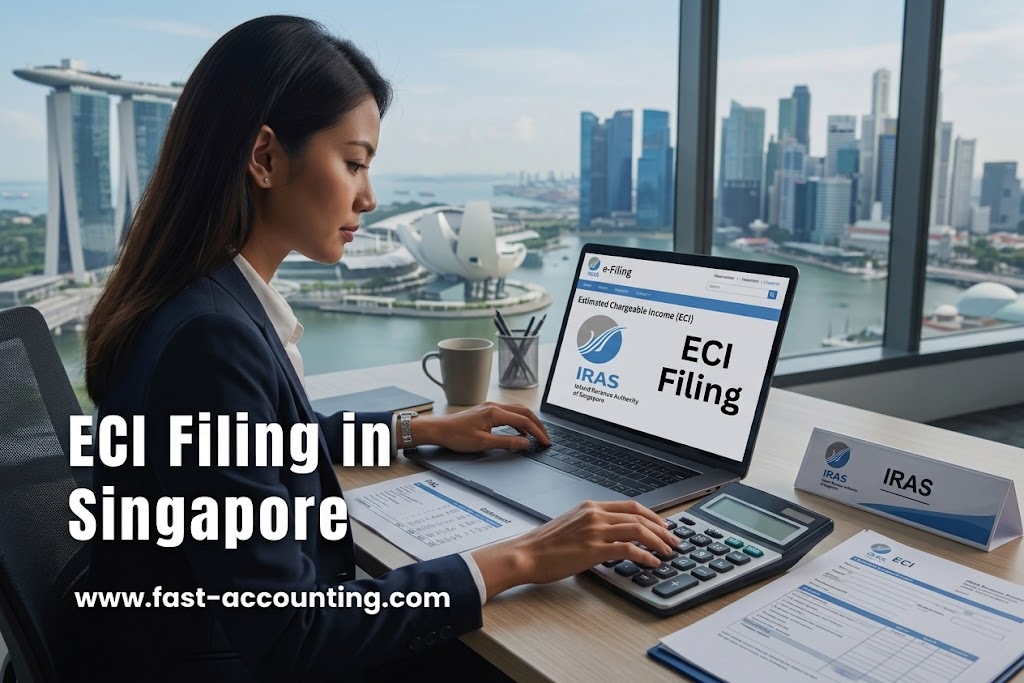
ECI Filing in Singapore: Why You Must File Within 3 Months of Your Financial Year End The ECI (Estimated Chargeable Income) filing for a company in Singapore must be submitted to the IRAS within the 03 months after the end of FYE (Financial Year End). It is important to meet the ECI deadline for corporate […]
Budget 2026 Corporate Income Tax Rebate: How Singapore SMEs Can Claim Up to S$40,000
Budget 2026 Corporate Income Tax Rebate: How Singapore SMEs Can Claim Up to S$40,000 Eligible companies can have a 50% CIT (Corporate Income Tax) Rebate on tax payable for YA 2026, combined with CIT Rebate Cash Relief of 2000 SGD for eligible companies under the enhanced Budget 2026 corporate tax rebate measures in Singapore. Companies […]
Corporate Income Tax Filing Deadline 2026: What Singapore Companies Need to Know Before 30 November?

Corporate Income Tax Filing Deadline 2026: What Singapore Companies Need to Know Before 30 November? The deadline for corporate tax filing for YA (Year of Assessment) 2026 is 30th of November 2026 for businesses filing their Income Tax Return with the IRAS. Companies are supposed to prepare computations of tax, financial statements, and supporting documents […]
What Corporate Secretarial Tasks Are Required Immediately After Incorporating in Singapore?
What Corporate Secretarial Tasks Are Required Immediately After Incorporating in Singapore? The most important milestone is incorporating your business with the ACRA of Singapore. However, the registration is only the start of the compliance pathway. The shareholders and directors are responsible for fulfilling accounting, tax, and legal obligations to help ensure the business operates in […]
What Happens to Company Debts When You Close a Business in Singapore?

What Happens to Company Debts When You Close a Business in Singapore? The debts of the business do not go away automatically when it is closed. The outstanding liabilities of the company must be addressed through the process before the company in Singapore is dissolved. It is important to understand that debts are normally handled […]
How Long Does It Take to Close a Company in Singapore?

How Long Does It Take to Close a Company in Singapore? The timeline needed to close a business in Singapore depends on the method used to close it. For example, if a company qualifies for striking off, the process of closing a business may take a few months because of notice periods and regulatory reviews. […]
What Are the ACRA Requirements to Strike Off a Company in Singapore?
What Are the ACRA Requirements to Strike Off a Company in Singapore? The company is supposed to meet certain terms and conditions given by the ACRA. In other words, the business must have ceased operations with no outstanding liabilities, and it should not be involved in legal actions. The simple way to remove a company […]


